RGB LED Channel Lettering- Custom LED Business

Illuminated Channel Letter Type Selector

Most signage projects start with a size and a logo file, when the decision that shapes everything else is how the letter actually lights. This selector compares the main illuminated channel letters by light direction, daytime appearance and control, then shows where led channel letters with RGB colour mixing change what a facade can do after dark.

RGB LED Channel Lettering- Custom LED Business Sign

Compare Six Channel Letter Types at a Glance

Read across a row to see how one type handles light, daylight and control. The highlighted row is the build covered on this page.

Type Light direction Daytime look Best use Control options Indoor / outdoor
Front-lit acrylic Forward, through a translucent face Solid, saturated coloured face inside a clean trim Storefronts and fascia signs read from a distance Fixed colour, dimmable with the right driver Both, with sealed returns outside
Backlit metal (halo) Backward, onto the wall behind the letter Bare metal or painted letter, no glowing face Premium entrances and dark or textured facades Fixed colour, brightness set at installation Both
Double-sided Forward on two opposite faces Readable from both approach directions Projecting blade signs, corner buildings, walkways Fixed colour per face Both
Sandblasted face Forward, diffused through a frosted face Soft frosted white surface, low contrast Interior feature walls and quiet reception signage Fixed colour, gentle dimming Mostly indoor and sheltered
RGB / dynamicThis page Forward, colour mixed from red, green and blue Bold, saturated face that stays legible in daylight Retail facades, hospitality, stage and exhibition Brightness, colour and dynamic effects adjustable Both, weather-sealed for exterior mounting
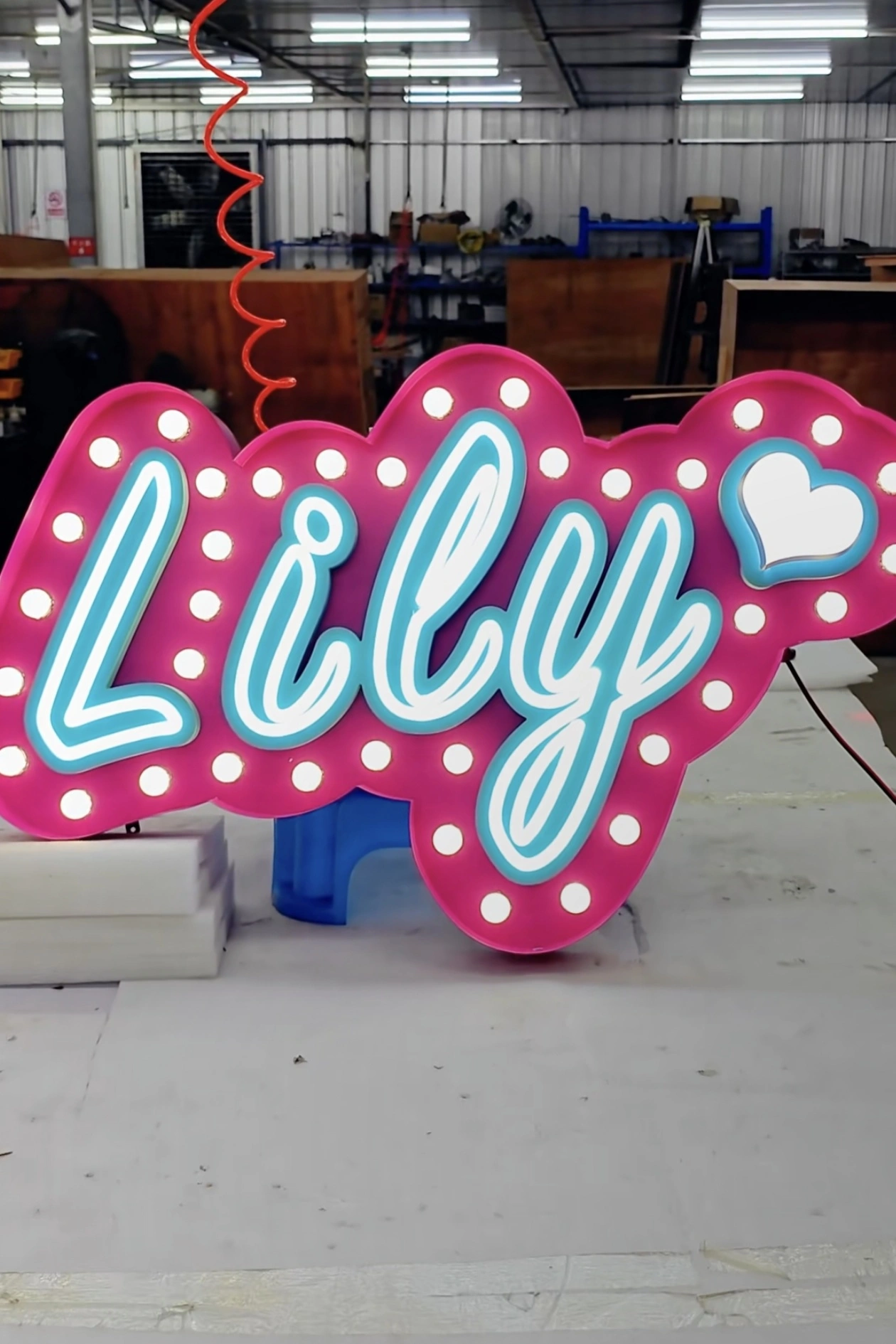
Bulb / vintage Exposed points of light on the letter face Visible bulbs and a retro, hardware-forward look Bars, cafes and themed interiors Simple switching, limited dimming Mostly indoor and sheltered

Qualitative comparison only — final size, layout and finish are confirmed per project during quotation.

What Light Direction Actually Changes

Light direction is the variable that decides whether a sign reads as a glowing face, a glowing wall or a glowing outline.

Front-lit: light leaves through the face

LED modules sit inside the letter and push light forward through a translucent face, so the whole letter reads as one block of colour. The trade-off is a frame that stays quiet while the face carries the brand.

See all types →

Halo / backlit: light leaves through the back

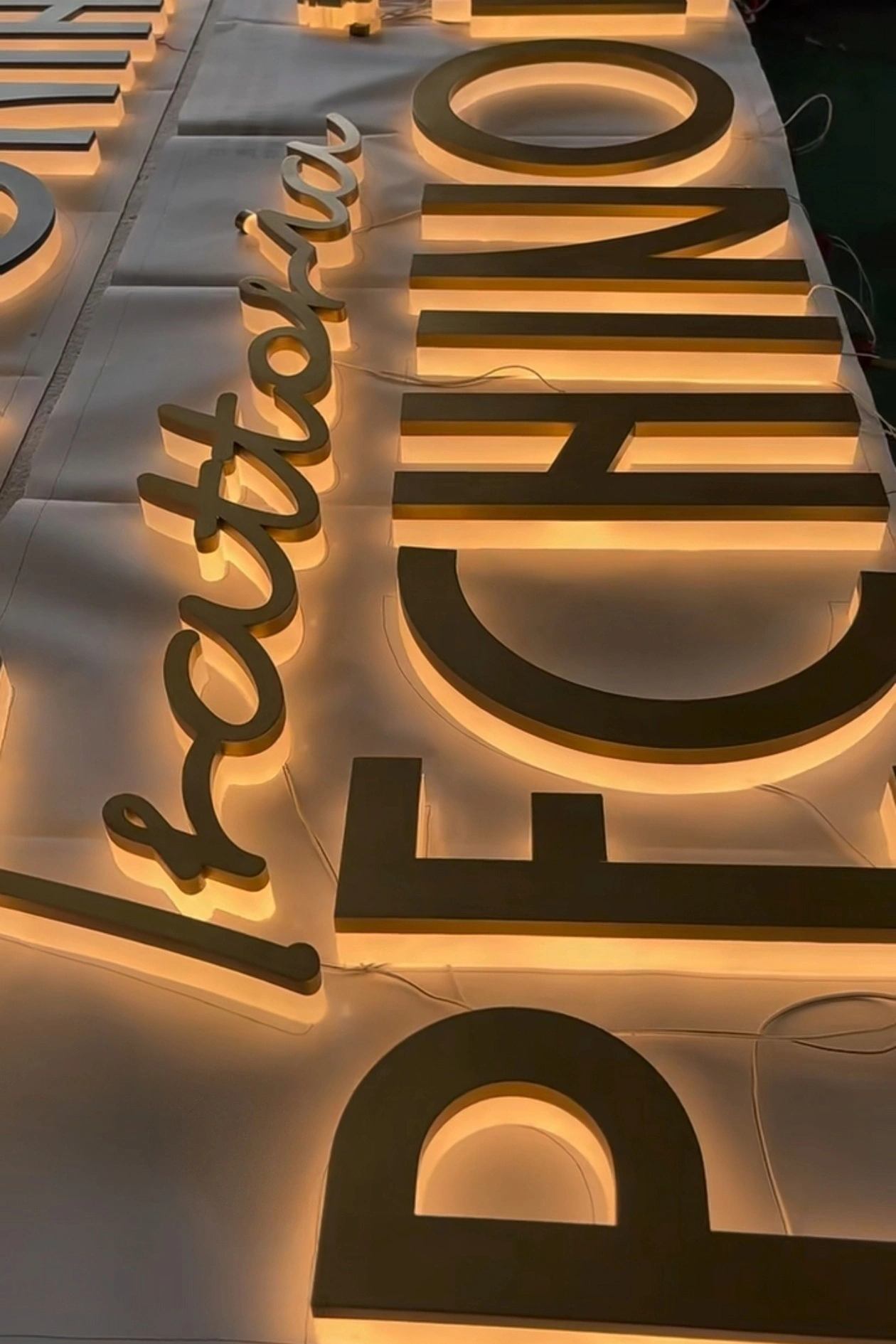
Modules are mounted to shine backwards onto the wall, leaving the letter face in metal or paint. The trade-off is a crafted, solid letter by day and a silhouette traced in light at night.

See all types →

Side-glow: light leaves through the trim

Light is directed through the side return so the outline glows while the face stays muted. The trade-off is a slim, low-profile effect that suits interiors and shallow fascias better than long sightlines.

See all types →

How Face and Return Pairing Changes the Daytime Look

The same light source reads completely differently depending on which face material sits in front of it and which return wraps the side.

Acrylic face + aluminium return Even colour across the face with a crisp metal edge. The default front-lit pairing.
Metal face + open back No glow on the face at all; the light washes the wall instead. The halo pairing.
Acrylic face + trim cap A defined rim around the letter, which sharpens the outline in bright daylight.
Sandblasted face + shallow return A soft, diffused surface for interiors where glare matters more than punch.

A letter seen in section: face at the front, light source inside, return around the edge.

Inside the RGB Channel Letter Build

The RGB build is the type that lets one sign carry a whole palette instead of a single fixed colour.

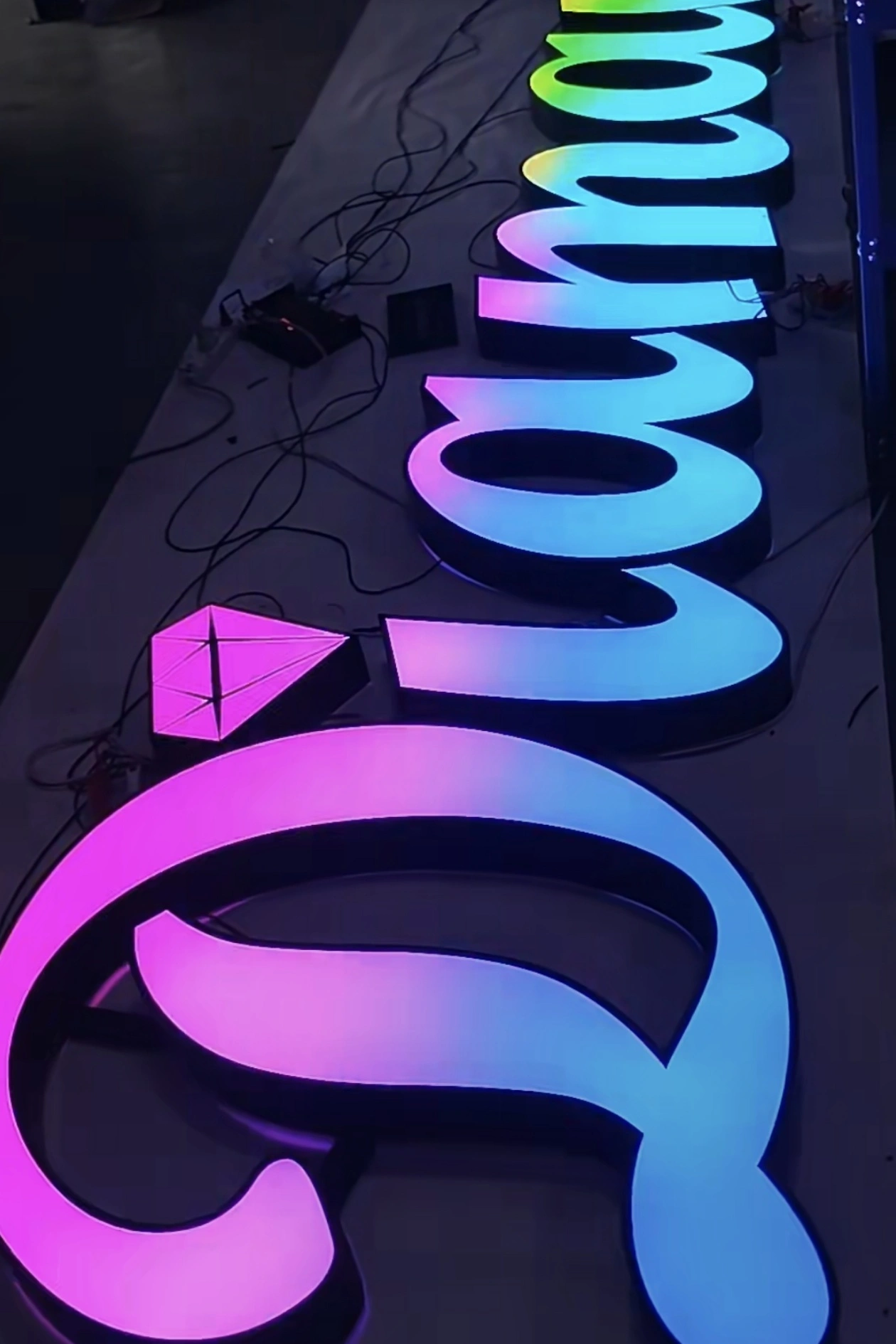
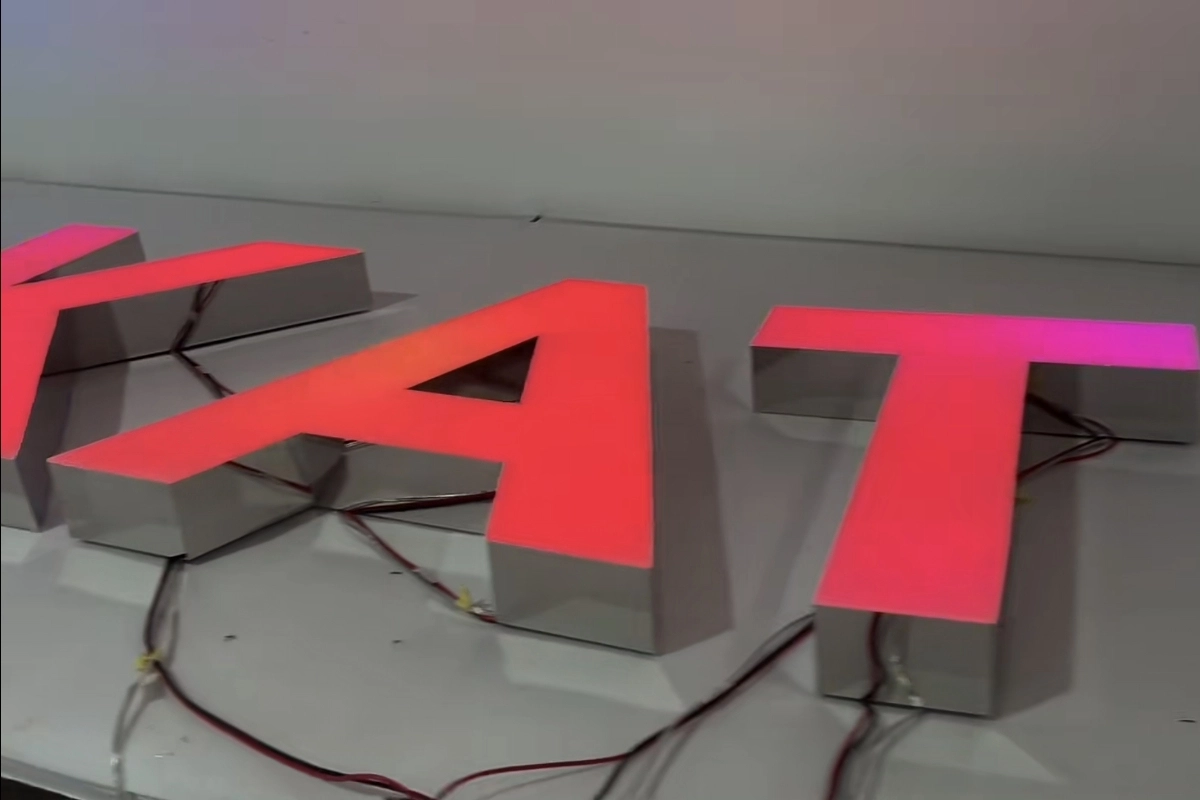
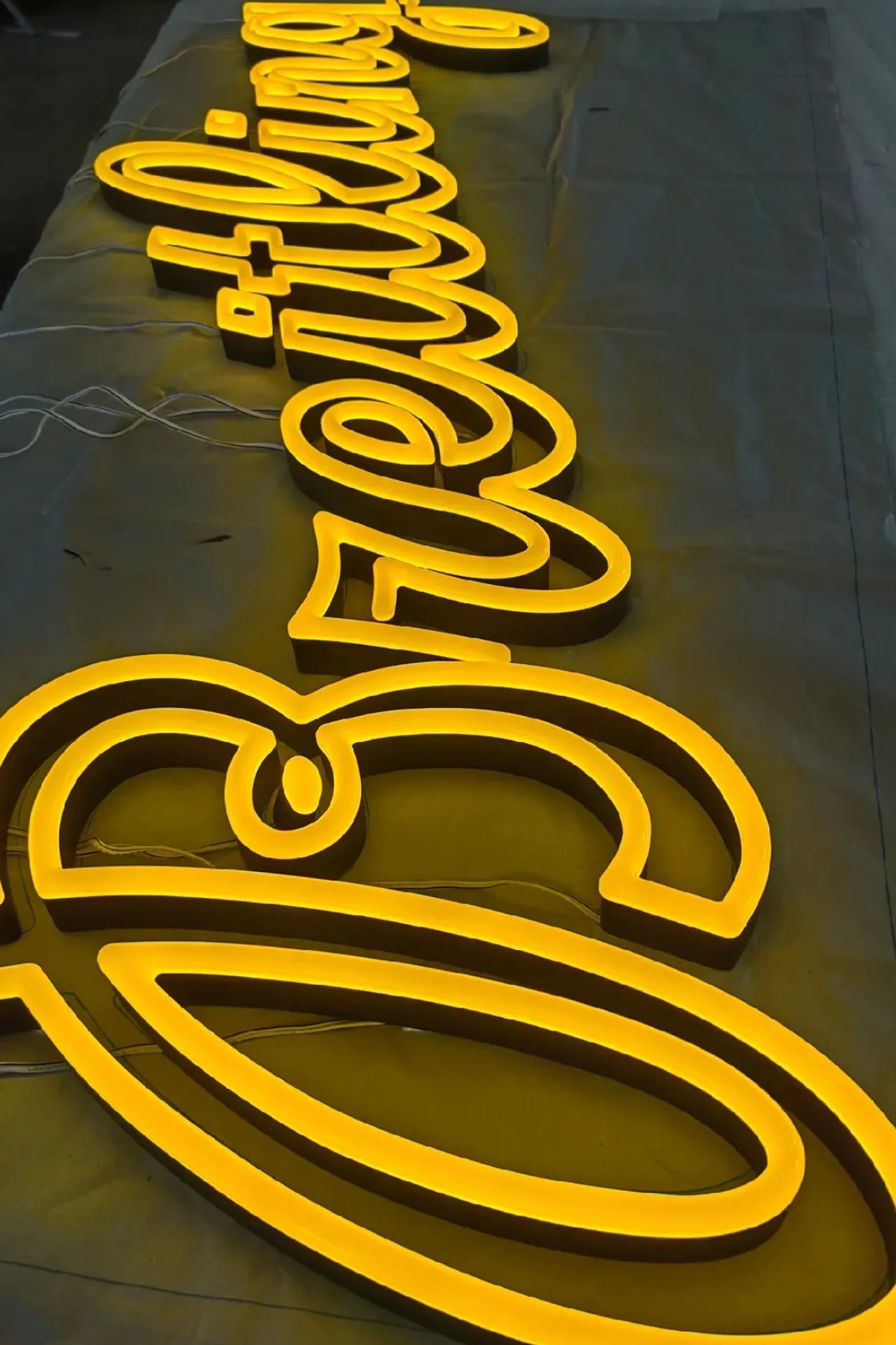
RGB LED channel lettering custom LED business sign detail

RGB LED Channel Lettering — Custom LED Business Sign

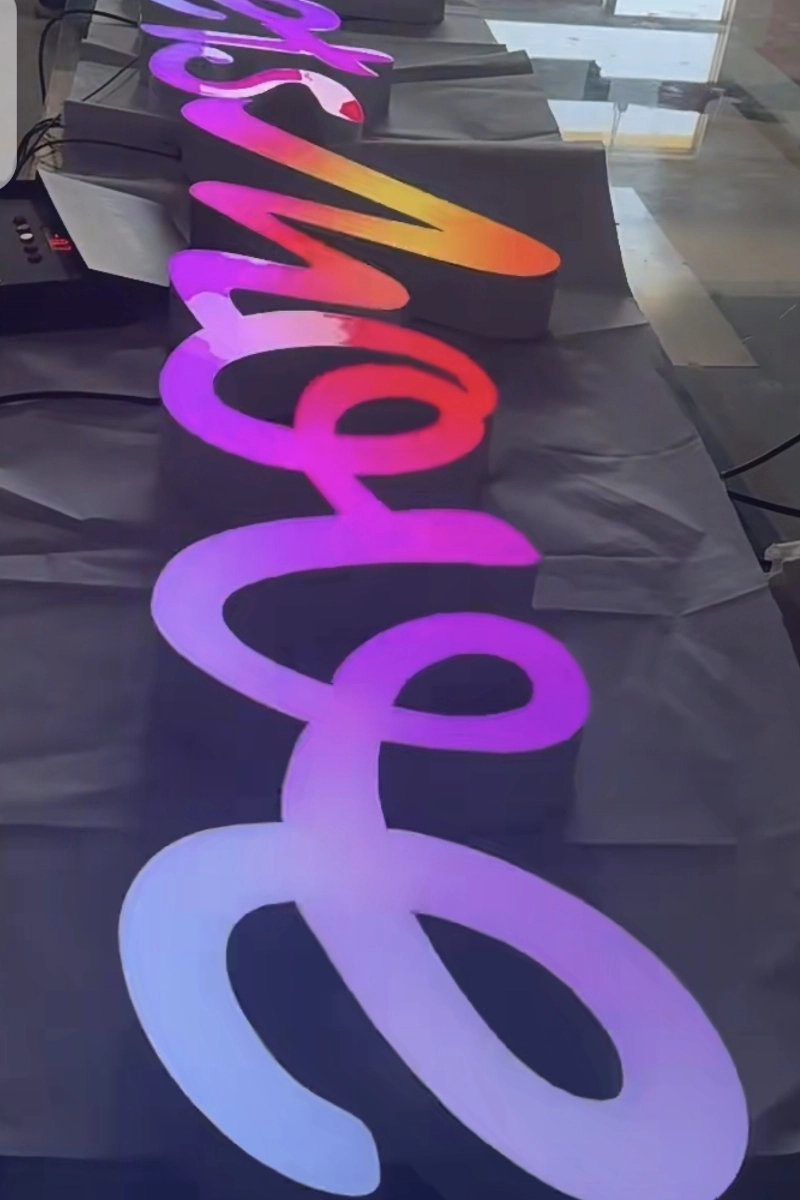
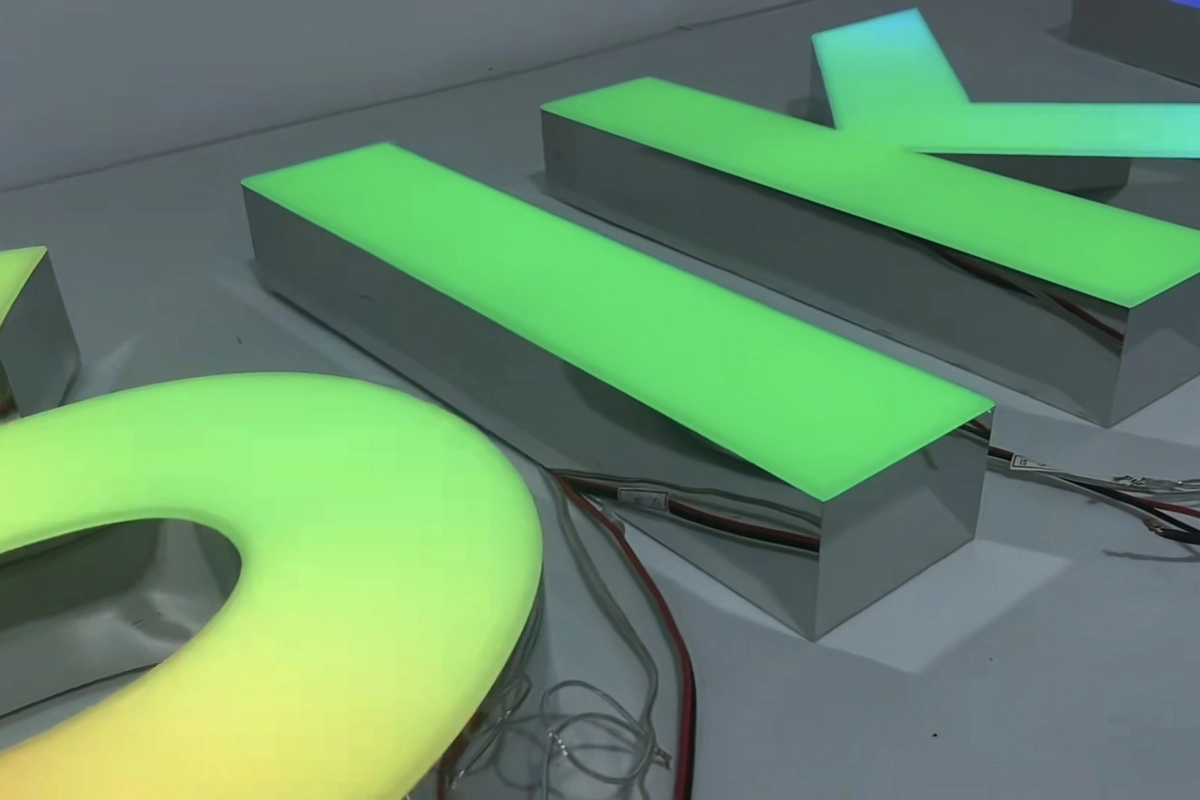
Red, green and blue LEDs blend inside each letter to produce a wide spectrum of hues, so a single build can serve a brand palette, a seasonal campaign or a nightly show. The light source is described as low-consumption and long-lived, which keeps energy and maintenance costs down over the life of the sign.

  • Light source: RGB LEDs blending the three primary colours
  • Control: brightness, colour and dynamic effects are adjustable
  • Environment: waterproof, dust-proof and impact-resistant, with weather sealing for outdoor use
  • Mounting: compatible with standard mounting systems and existing channel sign frameworks
  • Service scope: design, production, installation and maintenance from one supplier

Control, Brightness and Colour

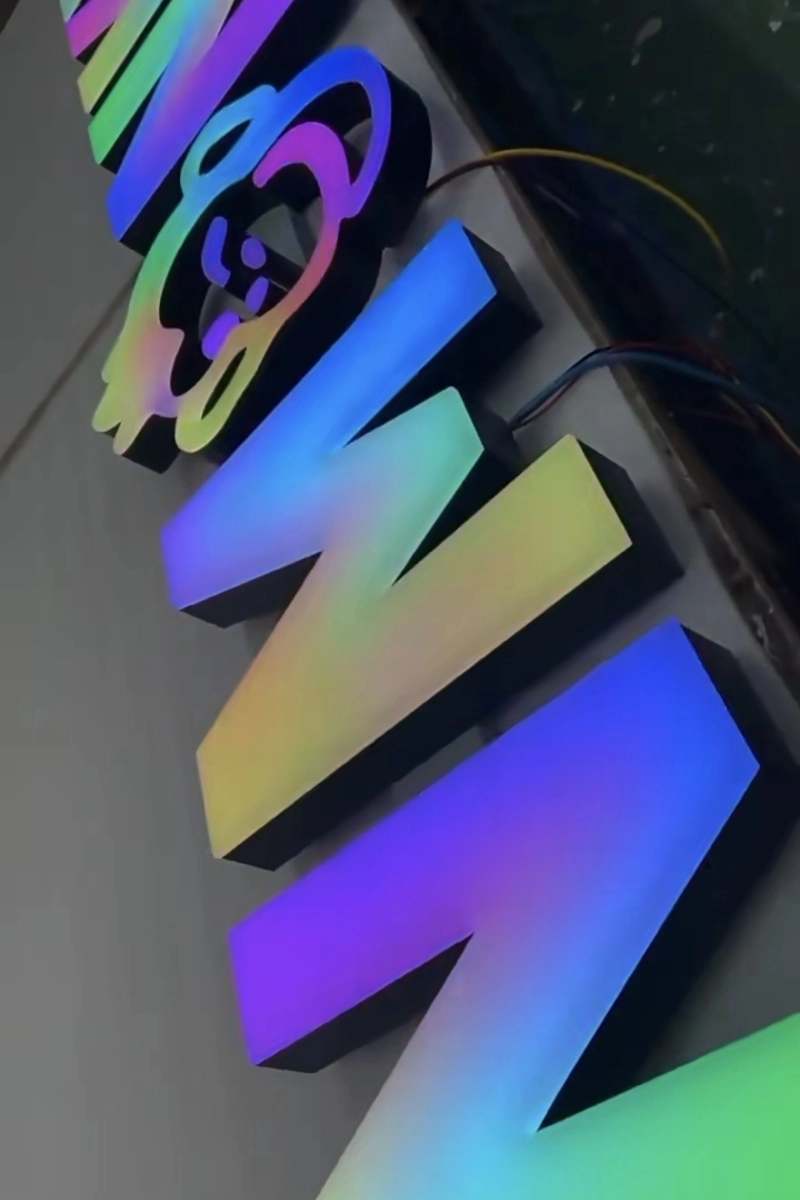
Where a fixed-colour sign is set once and left alone, an RGB sign stays adjustable. Colour hues and intensity can be tuned to match brand standards, a venue's mood or the requirements of a specific event, which matters most for retail windows and hospitality entrances that change throughout the year.

For hospitality projects the lettering can work alongside a venue's wider lighting management instead of competing with it, so the sign becomes part of the room's lighting rather than a separate system.

  • Colour range: red, green and blue mixed into a broad spectrum of hues
  • Adjustment: brightness, colour and dynamic effects from the control system
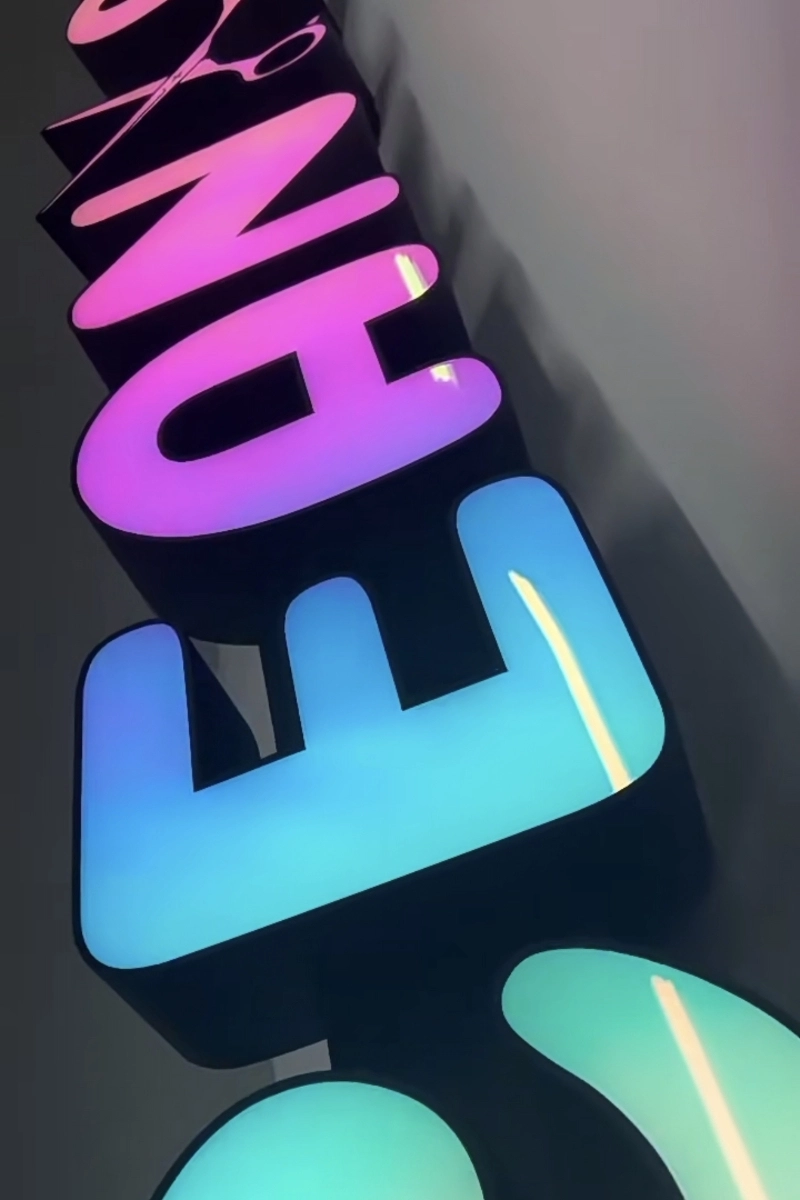
  • Daytime: strong luminous intensity keeps the lettering clearly visible by day
RGB LED channel lettering colour and control detail
Weather-sealed RGB LED channel letters on a building facade

Outdoor Readiness Comes First

A facade sign lives with rain, dust and impacts, so the weather sealing is a specification decision rather than an afterthought. The construction is described as waterproof, dust-proof and impact-resistant, with robust weather sealing built in to meet outdoor durability requirements.

That durability combines with a long service life and low maintenance, which keeps the lettering running instead of waiting on a service visit. If the sign sits under a canopy or inside a mall, the same build still works — but tell the supplier which exposure applies so sealing and fixings are matched to it.

Mounting and Retrofit Compatibility

How the letters attach decides the installation time, the access equipment and how easily a single letter can be swapped later. The build is modular and lightweight for exactly that reason.

1

Modular construction

Letters are built as modules, so the layout can scale up or down and a single unit can be serviced without stripping the whole sign.

2

Fits existing frameworks

Construction supports integration with existing channel sign frameworks, which reduces the complexity of replacing an older installation.

3

Standard mounting systems

Compatibility with standard mounting systems means familiar fixings and a predictable install sequence for the fitting team.

4

Lightweight retrofits

Lighter materials make retrofitting an existing facade or new build easier, and the layout can be adapted to a custom arrangement.

Modular RGB LED channel letters mounted on a building exterior

Match the Type to the Place

Start from where the sign goes, read the constraint that drives the specification, then confirm the type.

RGB LED channel lettering installed on a commercial storefront

Retail storefront and facade

Constraint: colour saturation and legibility must hold up in daylight, not only after dark.

Recommended: RGB front-lit channel letters

See the RGB build →

Hotel and restaurant entrance

Constraint: the daytime look must stay restrained, and the sign should sit inside the venue's lighting scheme.

Recommended: halo-backlit metal letters

See the backlit metal build →

Stage, event and exhibition display

Constraint: the colour has to change with the programme, sometimes several times in one day.

Recommended: RGB letters with dynamic effects

See the RGB build →

Architectural facade and exterior

Constraint: weather exposure and access for future maintenance decide the sealing and the fixings.

Recommended: weather-sealed RGB channel letters

See the RGB build →

Plan Your Quote in Four Lines

A quotation is only as accurate as the brief behind it. These four details let a supplier price the correct build the first time.

  • 1
    Type and light direction Front-lit, halo, double-sided or RGB — plus any custom colour, brightness or dynamic effect you want.
  • 2
    Cap height and letter count The size of the tallest letter and how many characters are involved, so the layout can be scaled correctly.
  • 3
    Mounting surface and access Wall, raceway, existing channel frame or new build — and how the fitting team will reach the position.
  • 4
    Indoor or outdoor Exposure decides the sealing, the fixings and the maintenance plan for the finished sign.

Send artwork, brand colour references and site photos with those four points and the quotation can cover design, production, installation and maintenance as one scope. Trade and multi-site enquiries are welcome.

Related Reading

Three notes to help clarify product requirements before contacting the supplier.

Custom LED Sign Brightness for Daytime and Nighttime Storefronts

A storefront sign that looks brilliant after dark can still disappear in afternoon sun, because visibility depends on contrast, color, and how the eye adapts to its surroundings.

Read article

Aluminum Returns and Acrylic Faces in Custom Channel Letters

A channel letter works because two different materials share one shell, and each has a distinct job in shape and light.

Read article

Weather-Resistant RGB Channel Letters for Building Facades

Weather-resistant RGB LED channel letters for building facades rely on an enclosure system in which metal returns, acrylic faces, seal paths, drainage, fasteners, thermal movement, and a dry…

Read article

Frequently Asked Questions

What information is shown for this product?

Review the product details, images, and specifications presented on the official product page.

Where can I check the intended application?

Use the application and use-case information published on the official product page.

Which specifications should I confirm before ordering?

Confirm the specifications and options listed for the exact product variant before placing an order.

Where can I check available options?

Check the official product page or ask the supplier about options shown for the selected product.

How can I request product information?

Use the official contact or inquiry path provided on the site.

What should I include in an inquiry?

Include the product page, intended use, required quantity, and any specifications you need the supplier to review.

We use Cookie to improve your online experience. By continuing browsing this website, we assume you agree our use of Cookie.